This was a slow weekend. I had just recovered from the usual – cold and fever. I think it’s a season favourite. Around July to September every year, Bombay public is suffering from it. This weekend we were both healthy, well slept and ready for some movie time.
Saturday was spent well at a newly opened book store in Bandra followed by a dinner date with husband at a cafe. Bombay is competitive when it comes to dinner reservations on the weekends. I remember watching the series Sex and the City and wondering why they make prior dinner reservations and fight to make it to the newly opened bar. I mean, wouldn’t you just walk in and get a table? Turns out, Bombay is no less!
Sunday mornings were the usual – walked to buy weekly groceries and stopped for a nice hot Latte at my favourite cafe. I read a few pages from the book I bought from the Bandra book shop. On the way back I saw some big pink Lillys on sale at my regular flower shop. I couldn’t resist and bought home a bunch. The entire house is filled with its smell and it will last a whole week now.
The first million dollar question had to be answered now – what to cook for lunch. I wanted a simple lunch though so I stuck to the basics and made Dal Chawal and prawns sukka. Don’t go by the restaurant expectation of it, it was just a freestyle version of prawns dry sabji and it did not disappoint.
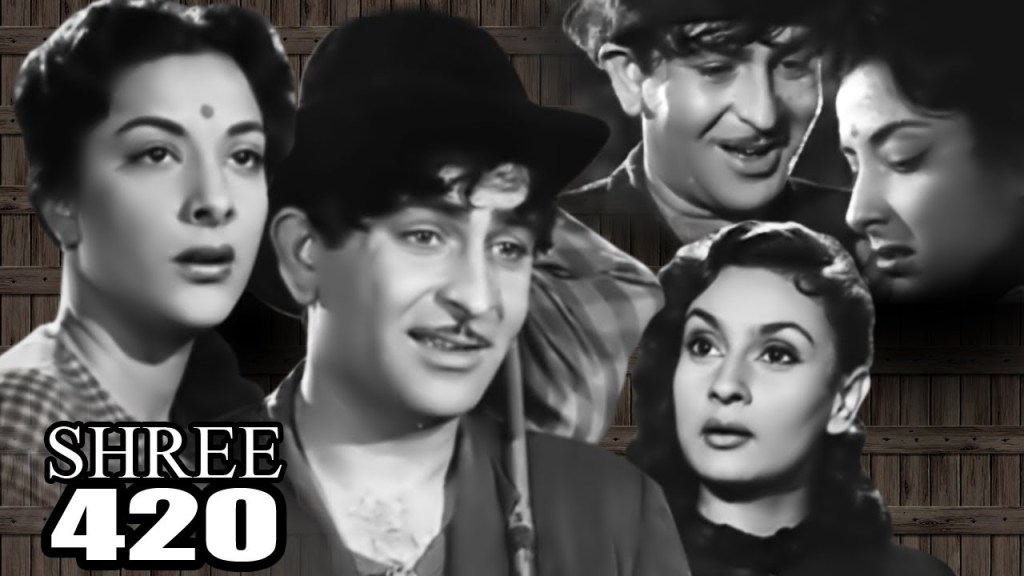
The second million dollar question was of course what movie should we watch? Lately we’ve been trying to watch a lot of black and white films and the effect was lingering on to this weekend as well. We decided to watch “Shree 420”. This is 1955 release, produced and directed by Raj Kapoor. Raj Kapoor is also the male protagonist and the female protagonist is the ever beautiful Nargis Dutt.

The story is quite simple – a small town boy moves to Bombay to make it big in the city. As life takes its course and he realises the harsh realities of making it one meal a day in this city, the protagonist is lured into earning fast money. He dupes businessmen by convincing them to buy shares of a non-existent company, gambles his way to the top and hides his true identity. He soon realises how far he has come, and how much of himself he has lost in this circus. He then does everything he can to set things right.
The honest, innocent small town boy is played by Raj Kapoor with a Charlie Chaplinesque sense of being. The costume, moustache, the funny walk – it’s all inspired and almost copied from Charlie Chaplin. I was wondering why he would add this element to his acting but I satisfied myself with the answer later. His character is constantly saying that every person wears a mask – a happy mask, sad mask, be it what one chooses but it helps one hide one’s true emotions. He comes from a needy and poor family and to mask his real feeling of trying to make it in this city, he hides his emotions by a caricaturist almost spoofy way of being. What better character than that of Charlie Chaplin to enact this. I remember reading somewhere that even Charlie Chaplin, who dedicated his entire life to make others laugh, led a sad life himself. His character was possibly his mask to hide his real life?

Honestly, I was not a fan of this Charlie Chaplin version and somehow felt that did not fit in this world. By the time this character understands how the world works and makes some money, his sensibilities change completely. He walks like he owns the room, speaks with a sense of flirtation, acts very “English”. It was nice to see this change. The Charlie Chaplin act was dropped by then, thankfully.
The film has more sets and less live location filming. The huge doors that open to lavish parties where dancers do well choreographed dances, are just big sets. Not just the indoor scenes but even some of the outdoor scenes felt like a set, for example the streets of Bombay. It doesn’t feel like Bombay; it feels like a busy street of a bazaar in a post independence poor India. I wonder if that was in fact the attempt. I think that the Bombay I’ve seen in films of the 70s and 80s felt more close to what we see today.
It is impossible to write of this film without mentioning the songs. Every song is popular and most of my generation would know them all and this was a 1950s film. Imagine, the effect that lingered on for so many years!
The film begins with “Mera joota hai Japani”. How many recreations of the Charlie Chaplin walk with this song must we have seen on screen? Plenty, I suppose.
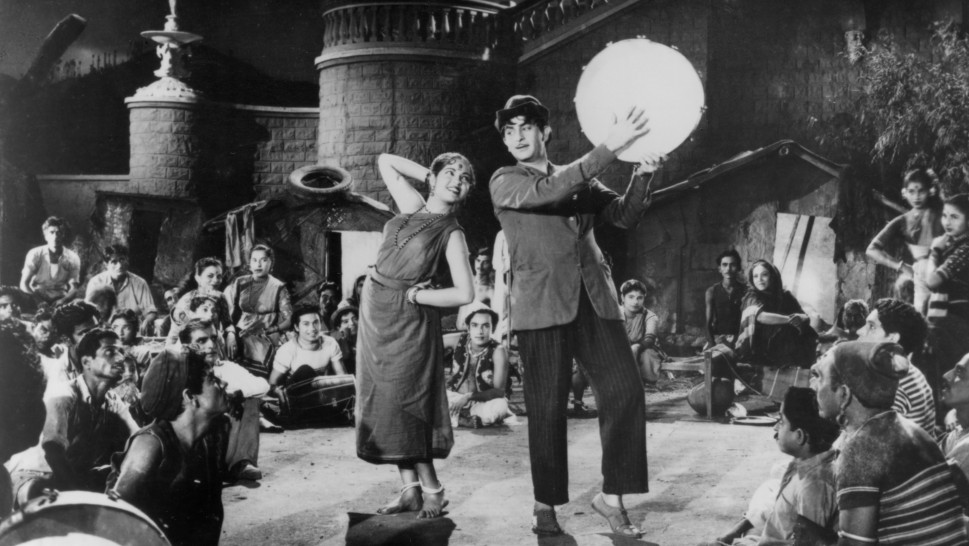
Nargis is seen signing “ichak daana bichak dana” and it’s very sweetly done. An iconic scene from this song has been recreated in the OTT series “Jubilee”. I am going to have to rewatch that scene from Jubilee soon now. My first memory of this song is from DDLJ when Kajol sings this song while playing Antakshari during the wedding preparations.
In the romance phase, we get to hear “pyaar hua ikrar hua”. The iconic scene where Nargis and RK walk in one umbrella in the pouring rains of Bombay is just beautiful to watch on screen.
One of the lavish parties has a well choreographed “mud mud ke na dekh”. Towards the end of the film we get to hear “ramayya vastavaiyaa”. I mean I don’t remember a single Antakshari battle being complete without someone having sung this song. Then there’s also the background score itself. Something about the mandolin tunes is so nostalgic. I think this BGM has been an inspiration for several filmmakers and music composers later. My husband pointed out how the BGM from this film reminds him almost every SRK entry in a Yash Raj film.
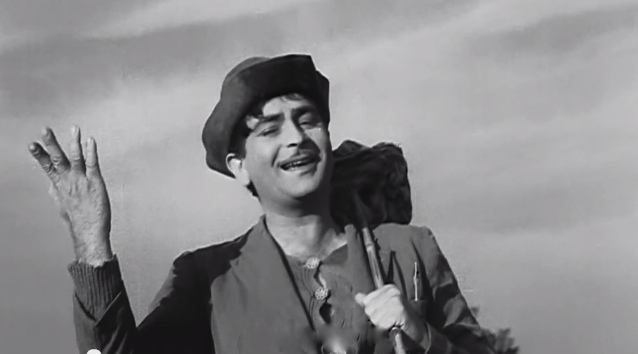
Of course the black and white monochrome effect adds to the beauty of the cinema. It is aesthetically pleasing and I am truly being drawn to watching films in black and white now.
I am not sure if I can say that one can sustain the entire film without forwarding some bits, but it remains an aesthetically pleasing watch all the way until the end. The couple looks great on screen, the supporting actors also play their part well but I think this movie can be lived through its songs. Something about the old tunes will hook you on to it.
-Aishwarya Bedekar
 Ityādi Diaries
Leave a comment