
It’s your second (and last) day in Venice. By the end of Day 1, you’ve done the famous Gondola ride and nearly just as famous Biennale with your spouse. There’s still a plethora of things on offer at the island city. You have heard great things about Murano and Burano. Hop on to a vaparetto, catch the glass art at Murano, marvel at the rainbow buildings and traditional Venetian food at Burano, and reach Venice by sunset. Sounds great.
So, you wake up early, get ready, and after exchanging a glance with your spouse that says all, toss the entire plan into the bin.
What now? There’s nothing like getting back lost time. So, you head to the hotel’s restaurant for a slow, nourishing breakfast buffet. A cup of piping hot Italian coffee is all you needed to drive away the mind-fog. A few sips and glances with the spouse, and a new plan emergess.
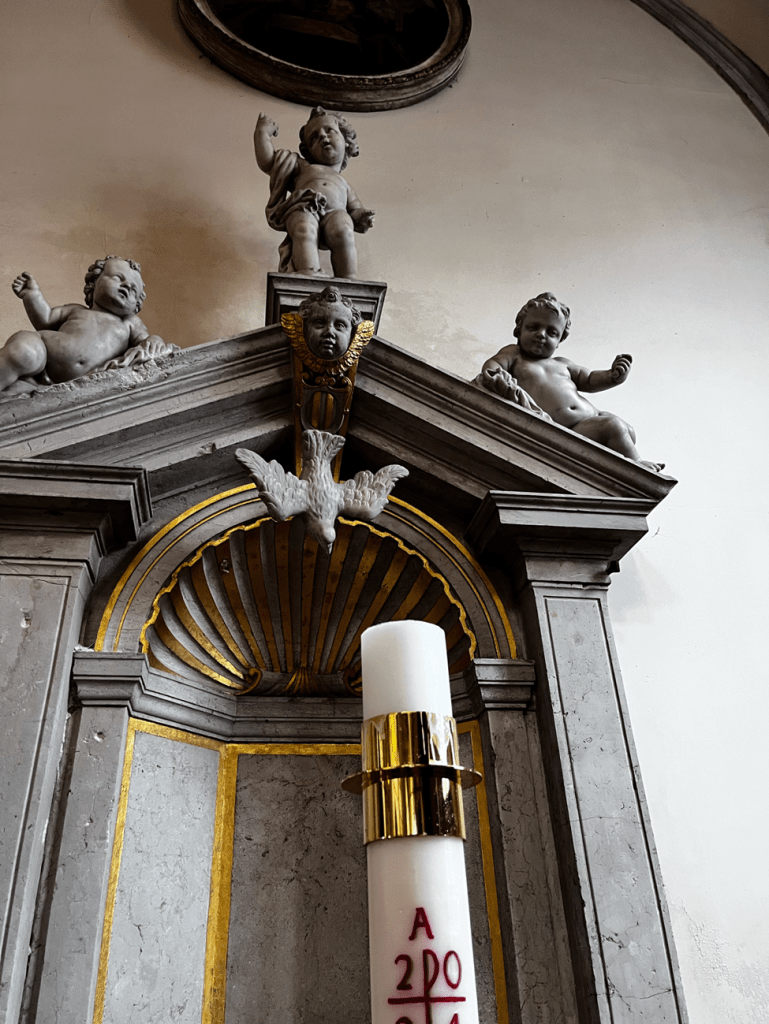
First, you set out for the Liberia Acqua Alta – supposedly the most beautiful bookshop in the world. On your way to the Liberia, while walking through the narrow streets of Venice, you reach a lively little piazza. It has a cafe on one corner and a small church on the other. You peep into the church – turns out it’s a repository of some excellent artwork. For a not-so-modest EUR 3.50, you enter the art section of the Santa Maria Formosa.
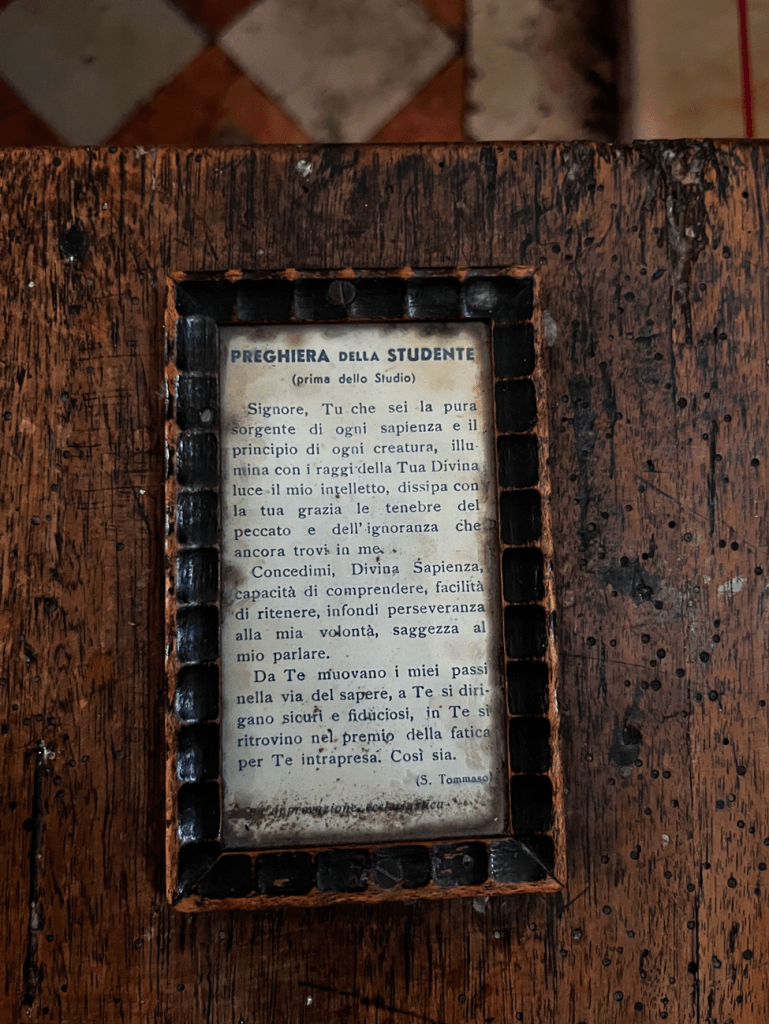
You realise that art and music share a close relationship with the Church. During the Middle Ages, that’s Europe between 5th to 15th centuries after Christ, pretty much everything was centered around an all-powerful God. Most people were god-fearing, guilt-infested, and illiterate. Only men of God had access to (religious) education. Books would cost a bomb. Reason was viewed with suspicion, lest the word of God be questioned by mere mortals.
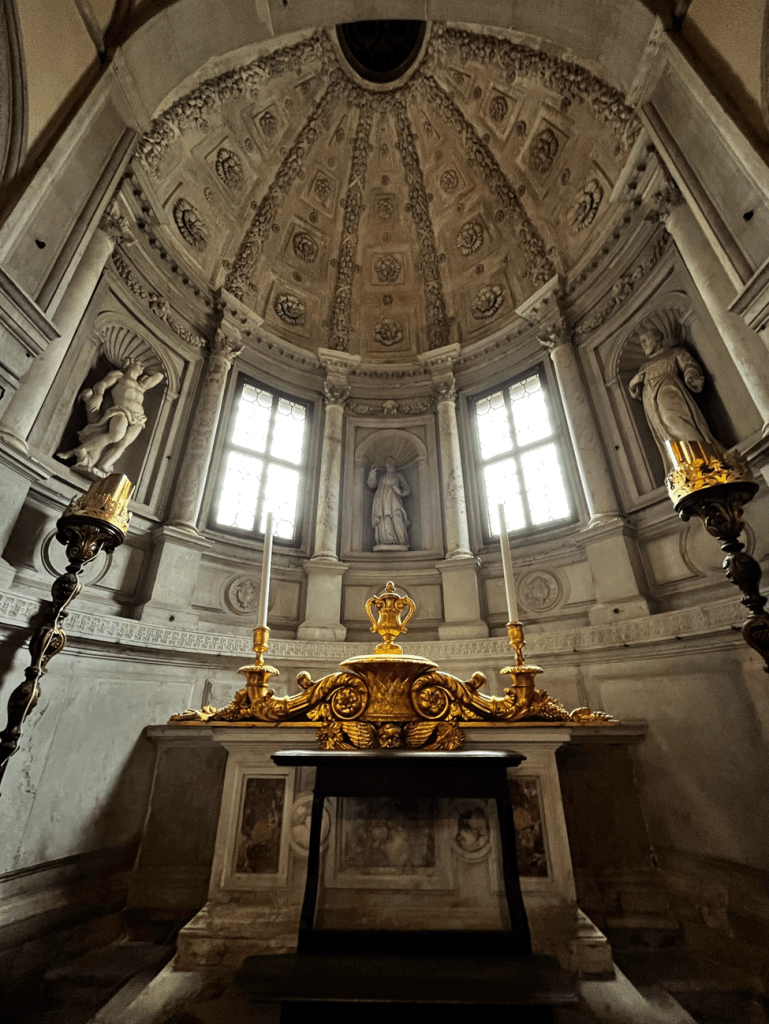
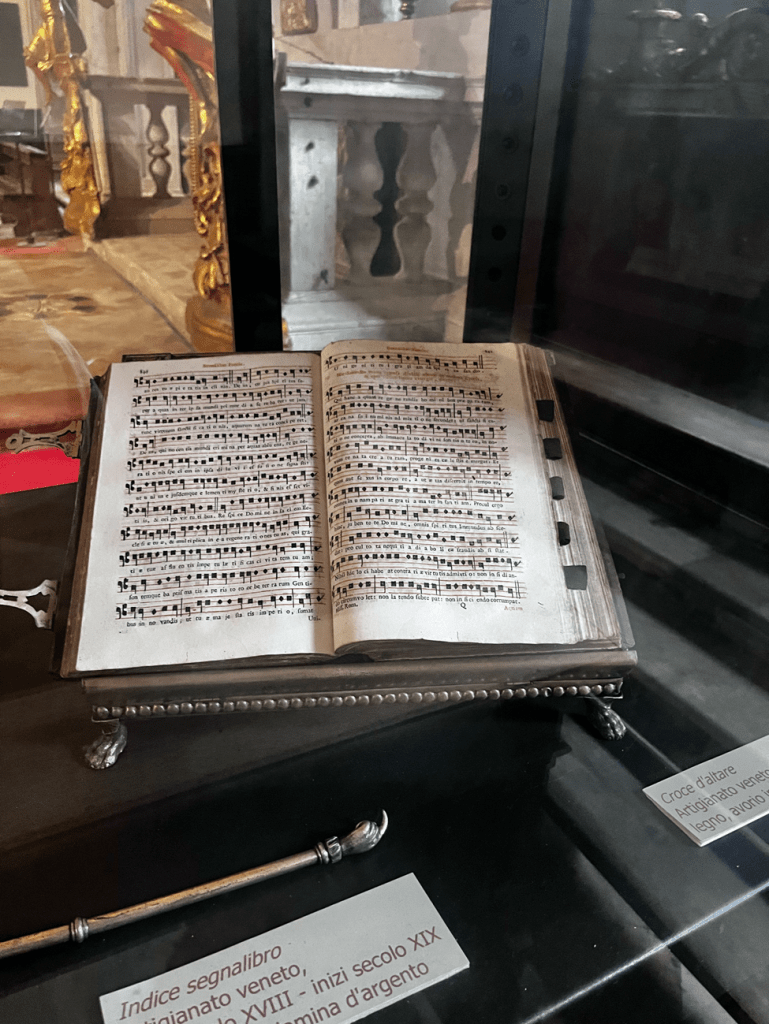
Despite this, art and music remained prevalent. Possibly because they were powerful means of spreading the word of those in power. The Church, at the time, commissioned art and music with a view to educating its largely illiterate subjects on matters of faith.
Most of the 12th-15th century art one observes at Italian churches, galleries, and museums are focussed on stories from the Bible. These paintings are almost all flat, largely devoid of the common folk or everyday scenes, and heavy on biblical figures with halos of (actual) gold.
Emotions are restricted to pain and suffering. They do not attempt to appeal to the aesthetic. Painters did not sign their work, much less painted themselves in it. The individual, be it the artist or the viewer, was only a means to reach God. Such was life. But not for too long. The urge to be free is inherent to man. No matter how sophisticated, compelling or systemic the cage of restraint, freedom will always break free. All it takes is the slightest crack in the wall. And so it transpired in Italy. The Middle Ages underwent a beautiful facelift during the Renaissance; but perhaps that’s a discussion for another post.
Wow, meandered there a bit. Venice does that to you. Literally, too.
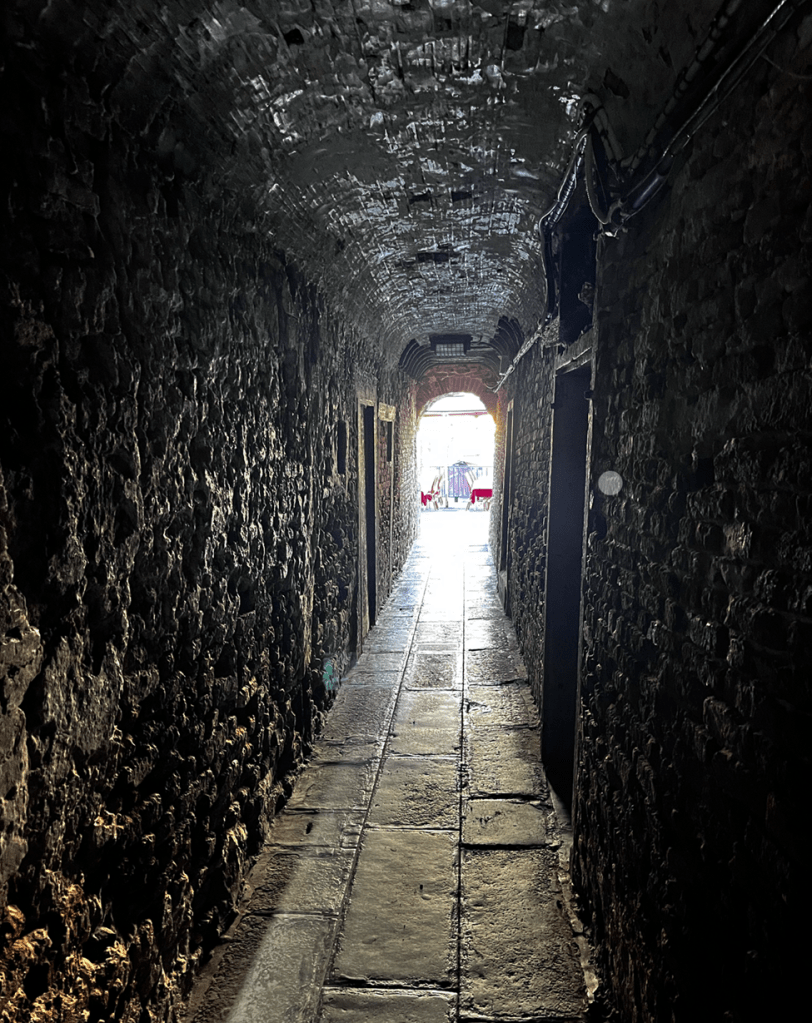
Back to the Mission Liberia. You step out of the church and head onto that little cafe parked in the piazza. The lively joint offers a refreshing cup of freshly roasted coffee, topped with a swirl of frothy milk. As you look up from your coffee, you see a little Caucasian kid running towards an Asian toddler. Their mothers look upon them. They let the kids loose. Nary a care in the world, the kids get instantly acquainted. They play and run around each other. Soon, a little girl arrives. She is reluctant at first. From time to time, she takes refuge behind her mother and peeps out to test the waters. Before you know it, she’s part of the pack. Together, the little ones wreak havoc. Just like they should. In that brief moment, you realise that love is the default setting – hate must be taught.
You reach the Libera Acqua Alta. Not sure if it’s the most beautiful bookshop in the world; definitely the most crowded. People enter and exit like an item on a conveyor belt. The place does have a unique aesthetic. It has walls and former gondolas crammed with books. Some new, some ancient. They have a wide range, too – from Venetian stories, the classics, a whole section on filmmaking, to the frothy and frivolous. They have it all. Most of it’s in Italian, though.
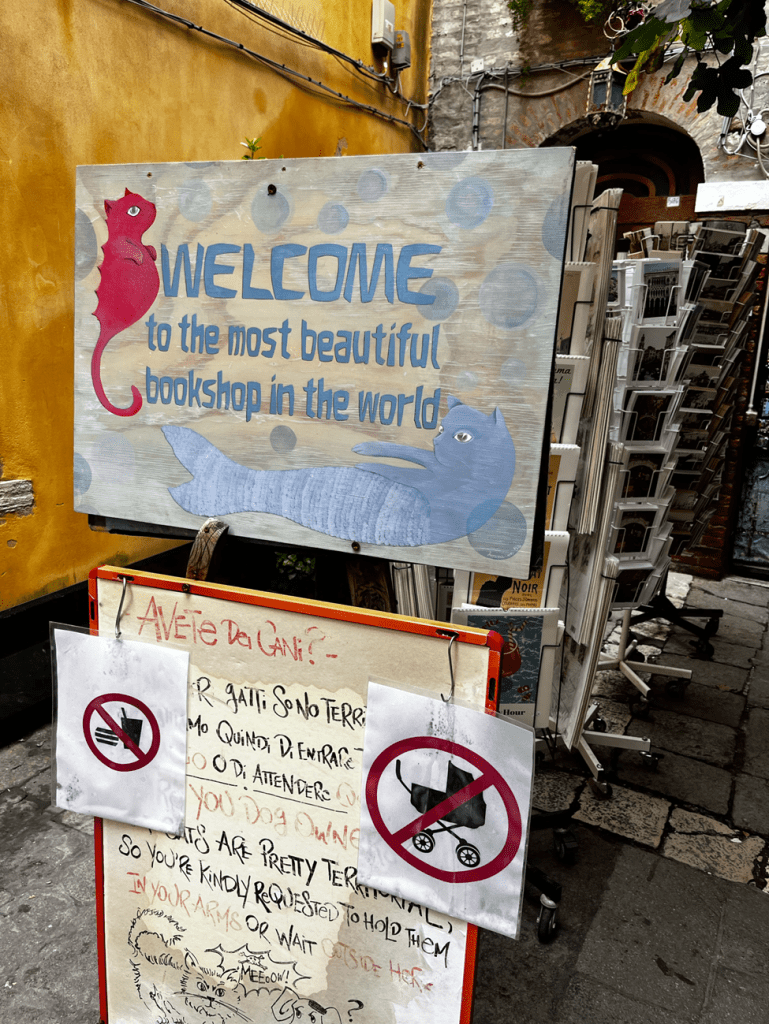
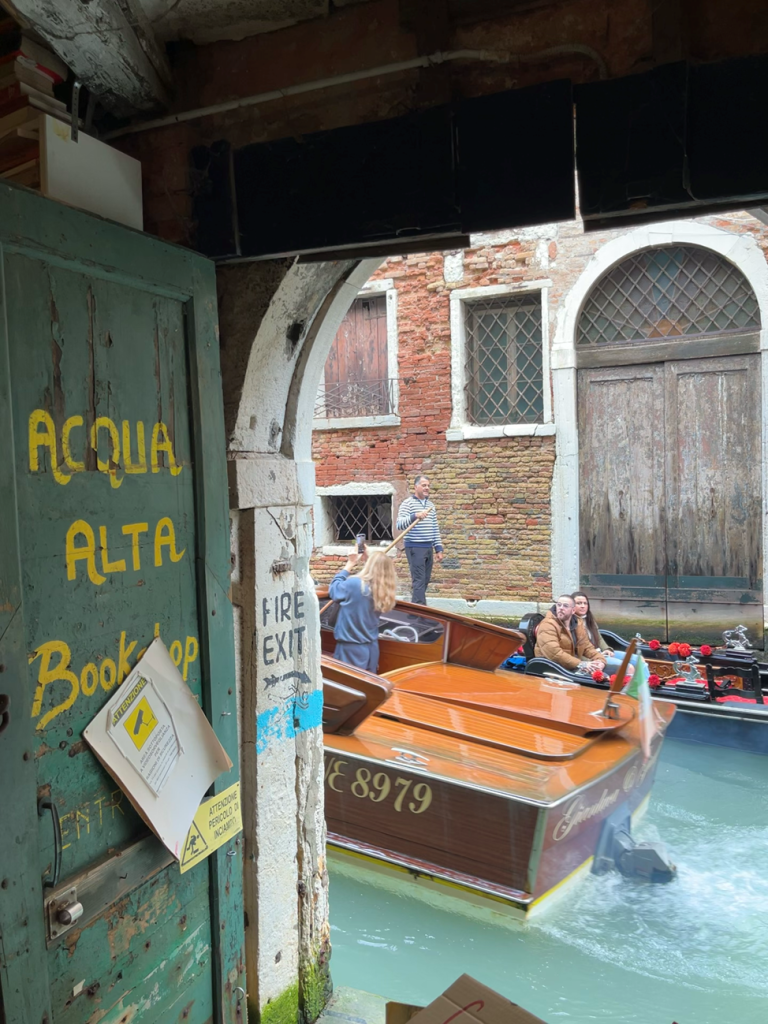
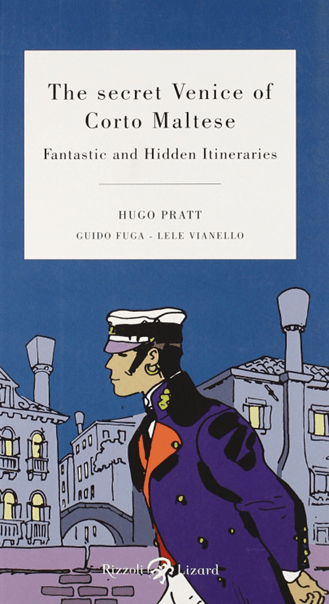
A comic-book catches your eye. ‘The Secret Venice of Corto Maltese’. Note to self: pick this one up on the next trip.
The Liberia’s flex on the gram is the literal staircase of books. Not sure what’s special about trampling on a stack on damp, rotting books. Sitting on them, surprisingly, is a strict no-no.
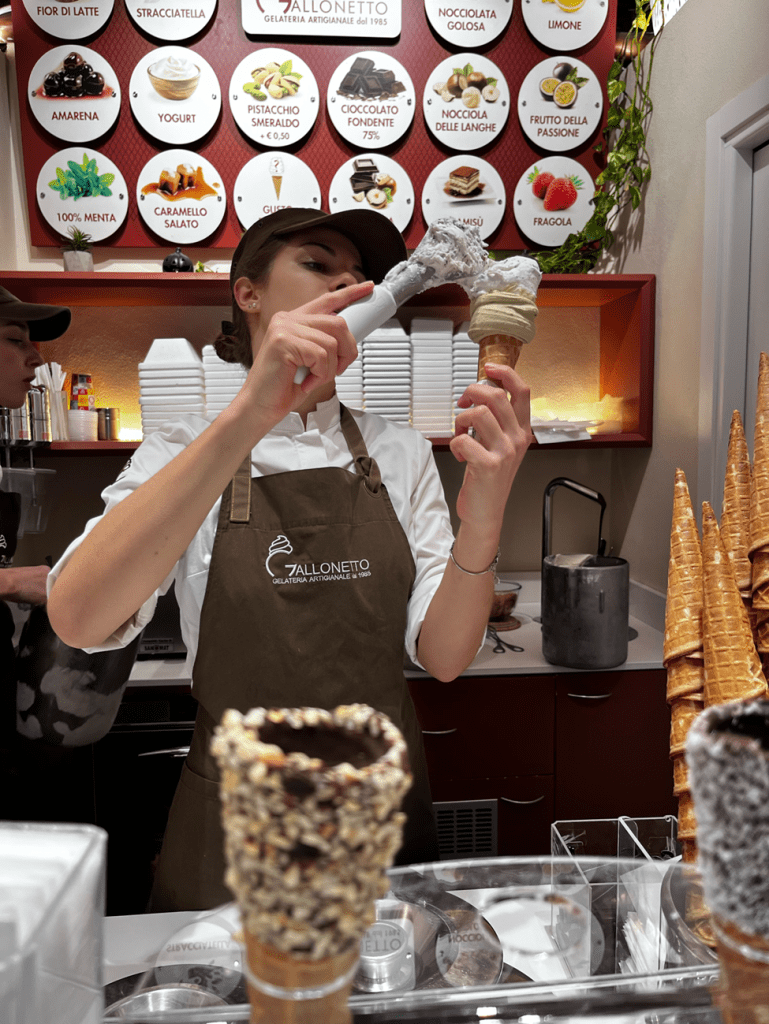
Onto the next stop. You check Google Maps and start walking towards All Arco’s. Soon, you will be crossing the famed Rialto Bridge. Meanwhile, your better half spots a gelateria. “A good gelato is stored in closed metal pots. It does not show overly bright colors and shine”, she says. You just want ice cream. “This one looks legit, let’s go”. And legit it was.
You get two gustos on a waffle cone: stracciatella (milk with chocolate shards) and pistachio. The pistachio is mind-meltingly good. Just a smooth, smoky, and creamy paste of high-grade pistachios pulverised into a dollop of heaven. Belissimo.
Lost in the gelato, you realise you’re standing atop the Rialto Bridge. Famous for being famous? A bit. Does it still look great? Definitely. You hangout on the bridge for a bit – take a couple of customary selfies with the wife and wave back at the tourists passing by on vaparettos.

A few steps later – you have reached your next stop. All’ Arco’s. Exactly the way you saw it on Somebody Feed Phil.
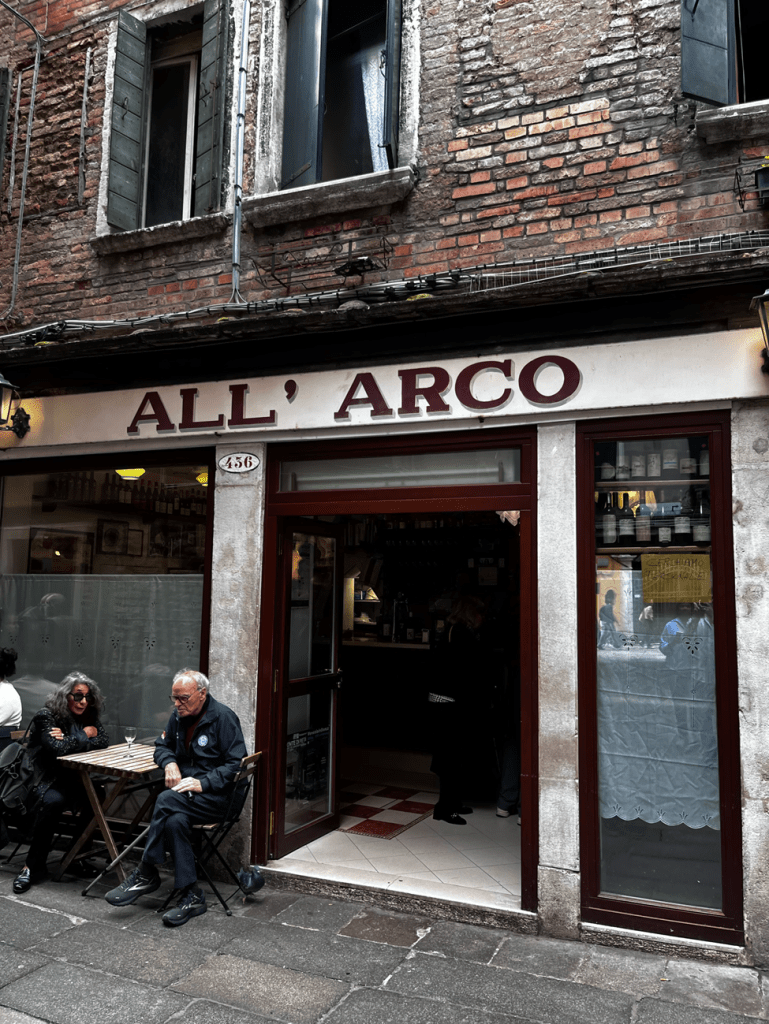
The humble looking establishment doles out delectable cicchetti by the minute. The glass display is populated with slant slices of baguette bread, each batch with a different topping. There’s slices of mortadella with micro-greens, Italian cheese with compote, fresh shrimp with olive oil, and a whole array of delicious combinations.
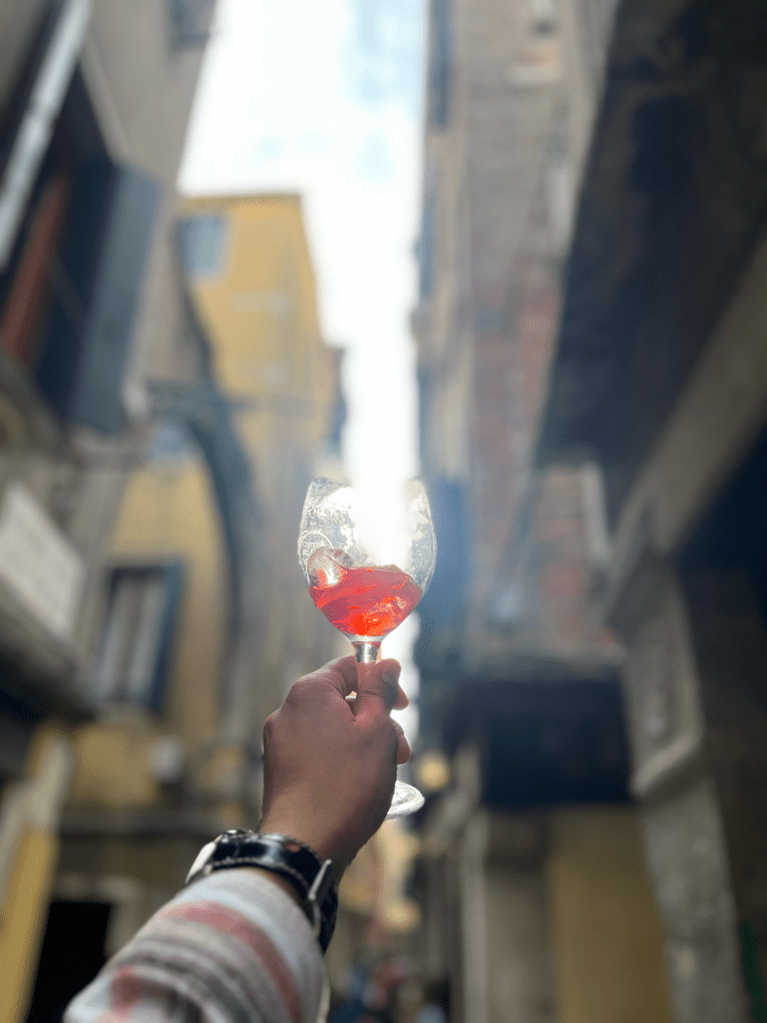
The pièce de resistance, though, is the baccala – a creamy paste of fresh shredded cod-fish with olive oil and parsley. You stack your plate with each of these treats, pair them with some Aperol Spritz, and polish them off as you look out the window from All’ Arco’s while sharing a chat with your best friend (read wife).
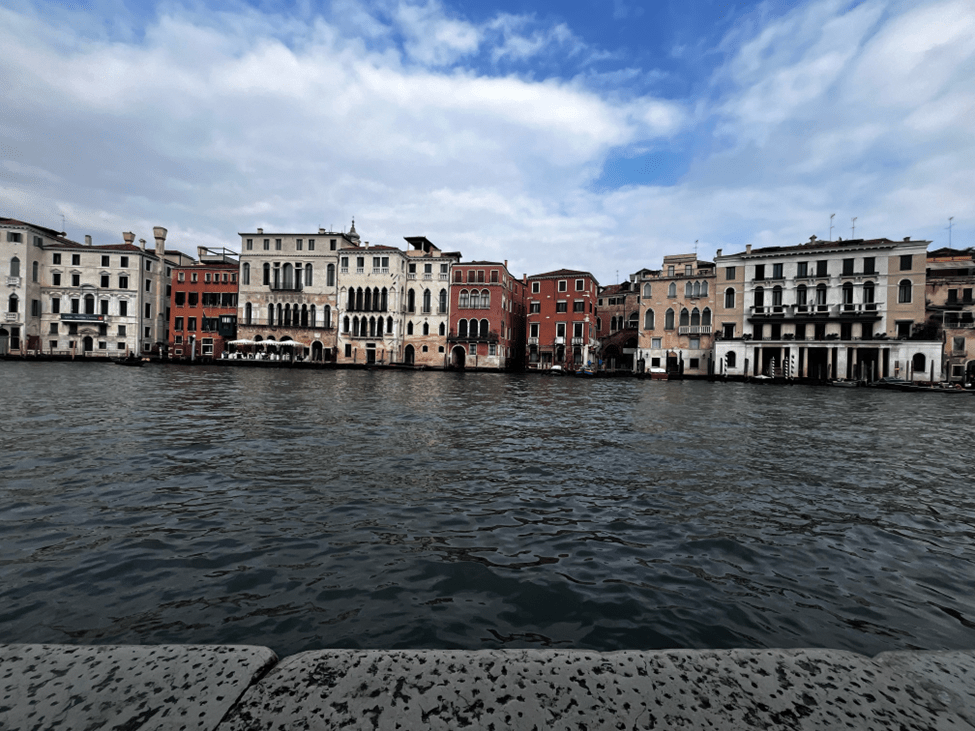
Noon is here and the stomach’s full. Time to take a break. A waking siesta, if possible. You walk a few steps away from All’ Arco’s and find yourself at a bustling piazza. You pick a few shards of aged parmesan and pair it with a glass of white. You find a spot at the banks of the Grand Canal and seat yourself with folded legs, back against a pillar, and feet hovering over the water. Boats of all shapes and sizes pass by as you yap away with your wife over delicious cheese and wine.
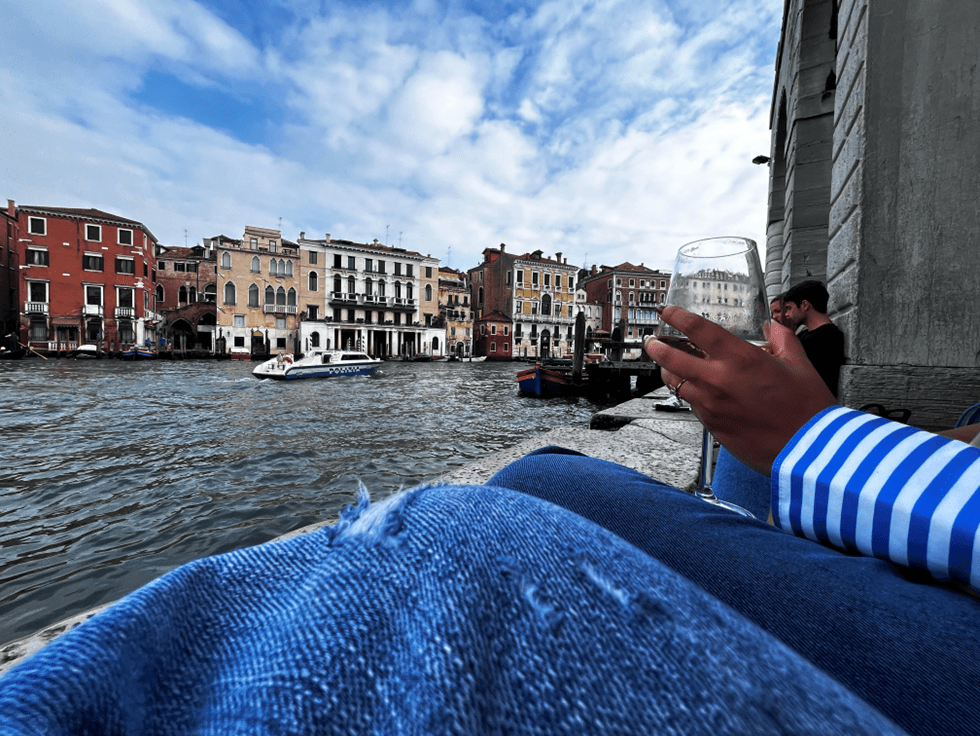
The sun shines bright, but softly. The beautiful buildings on the opposite bank provide shade. The overly maligned odor is nowhere to be spotted. A lightly salted breeze makes its way instead. You scoot closer to the wife, ask time to stop in the moment, look up to the city, and take a deep breath to soak in this day in Venice.
–Ritvik Kulkarni
 Ityādi Diaries
Leave a comment