It was a much needed slow weekend, this one. Saturday was spent sleeping and recovering. I had booked an appointment at the salon for the evening. My salon is very close to the sea and the time was just right. I reached the salon and looked across the road. The sun was setting and the orange hues were calling out to me. It was decided. Salon appointments can be fixed next week, first – need to catch the sunset. So, I ghosted my hairdresser and ran off to the beach. I thought, how much can one week of unkempt eyebrows and disheveled hair hurt? I’ll deal with it.
For now, it was me; the orange and pink skies; and within them was this shining bright red sun, the beach underneath singing – “Suraj hua maddham, chaand jalne laga”. I walked along the beach for a bit, soaked in the sky, and came back home. We then dressed up and left for a later dinner to a lovely restaurant in Bandra. Few cocktails and good sea food; it was the best date we had in months.
Sunday started pretty late. We were both too lazy to step out for coffee so I stepped down for quick grocery shopping. I bought a bunch of flowers for home. Cocooned in my couch, swapping Apps, I checked for what I (sorry, I meant ‘we’, or did I?), can watch next.
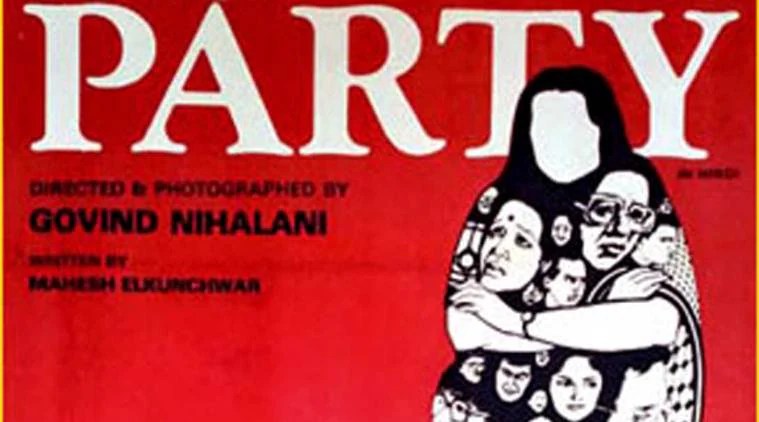
A few days back my colleague recommended a 1984 film called “Party”. He said you might be inspired to write about it. My husband was also interested in watching this one and he found a decent print on YouTube – only to realise later that the film was also available on Mubi.
Party casts an unending list of very good guests (actors), so here goes – Amrish Puri, Om Puri, Rohini Hattangadi, Deep Sahi, Manohar Singh, KK Raina, Ila Arun, Pearl Padamsee, Vijaya Mehta. Mehta, I realised, is the director of Pestonjee; a film i’ve previously written about here.
Naseeruddin Shah also stars in a cameo of sorts; and there’s still many names I’m missing out here. I think the director, Govind Nihalani, just called up a bunch of his good friends and asked them to free up their calendars for (the) Party. The reason I say this is because this cast is best known for what was called parallel cinema back in the day and I suppose they remained a group of like minded artists, away from the commercial cinema.
The film starts with conversations about attending an upcoming party. The party is hosted by a rich socialite, patron of the arts, in the honour of a playwright who has won a prestigious literary award. The film is set in Bombay of course, the melting pot for art and culture. The socialite lives in a palatial abode in a rich Bombay neighbourhood and, just like hers, every character and their personalities are introduced in the first 15 minutes of the film. I think the film is trying to reach a larger point of debate so the characters aren’t given space to develop as much. It’s all pretty much served on the platter in the beginning.
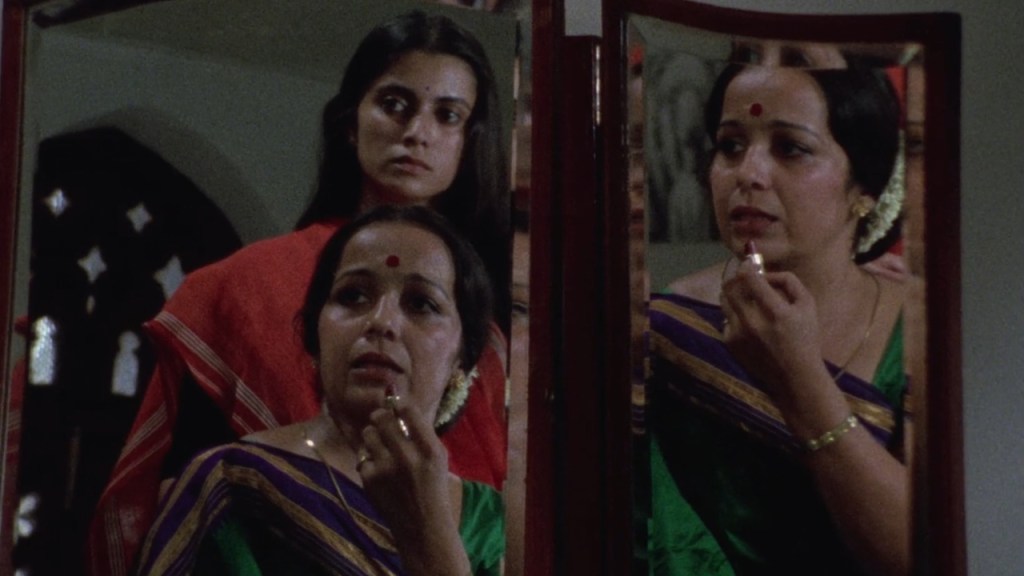
To describe a few characters – (i) rich socialite trying to stay relevant; (ii) cocky playwright, lauded and loved by the audience, got his break at the right time; (iii) an alcoholic forgotten actress who sacrifices her career for love; (iv) young writer-poet whose poetry is too honest for the audience; (v) well spoken journalist who throws around heavy English words; (vi) honest journalist, fearless to cover every news; (vii) cotton sari draping, whiskey drinking journalist with leftist beliefs and the character isn’t subtle about it at all!
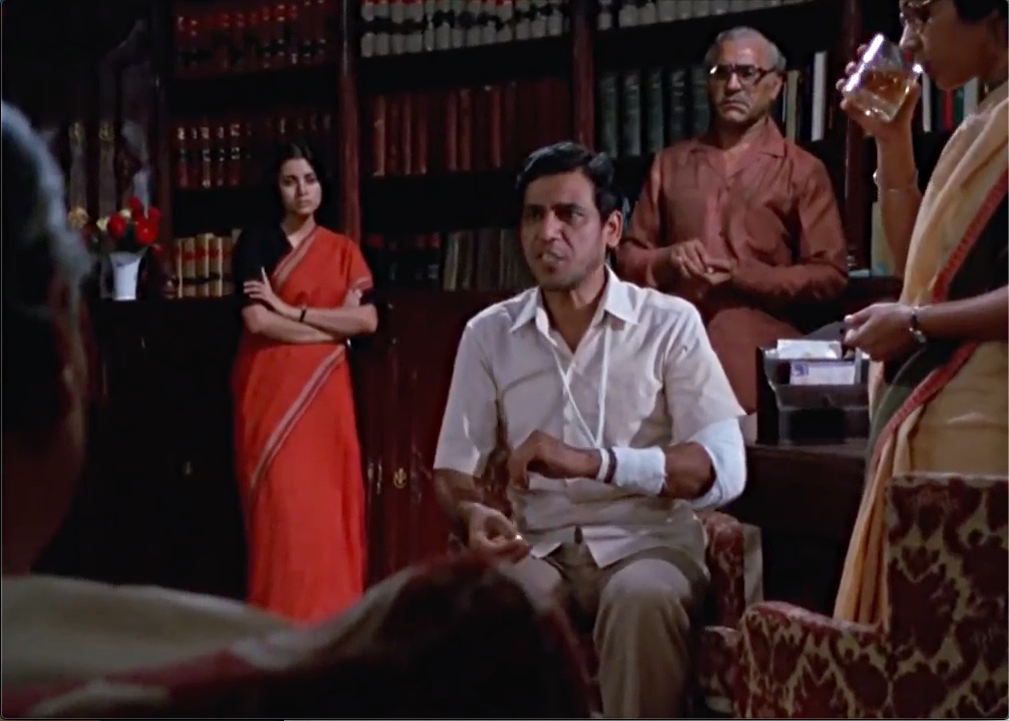
The last character had the most interesting contradiction. This woman speaks her mind, expresses strong leftist (Marxist) views – all while sitting in her father’s plush apartment in Malabar hills which flaunts ‘an MF Hussain’ in the living room. Feels relevant today, given that contradictory (hypocritical) behaviour remains prevalent among many people in this country.
At the party, everyone meets and greets, sips whiskey, socialises, all in the background of Hindustani classical music. The conversations are “high brow”, everyone’s speaking their mind, and everyone has a point of view. Interestingly, every discussion at the party boils down to life choices made by one absent poet-writer. A well known artist, he leaves the glamour of the city to work on ground with Adivasi tribes. He’s so away from his art, his clique, and yet they cannot bring themselves to stop talking about him. That’s one of the points of the film too. The artists / political leaders that choose to express their view on the political environment of the country are sitting in palatial houses, sipping whiskey while the real world, the stakeholders, burn and suffer on ground.
Theres a famous scene from this film towards the end, almost like a conclusion. It’s a debate between Amrish Puri and Om Puri on art and politics. One says that art is a tool to promote ones political ideals while the other says that art and politics can exist separately and they don’t necessarily have to be intertwined.
One makes a bold statement – if an artist is not politically committed, his art is irrelevant. While the other says that political ideology is not a prerequisite for good art. Believing in a political ideology, joining a party even, is an artist’s personal choice and shouldn’t come in the way of his art. However, he notes, great art is born from political protests, as has been observed in history, especially in the 20th century.
The honest writer-poet at the party then joins the discussion and makes a beautiful point – he says that if political commitment has to be a prerequisite to the art, then aren’t we compromising with the standard of art. What’s more important – aesthetics or political commitment? He then pauses and adds that maybe these discussions are futile because an artist can’t choose, really. An artist expresses, because he can’t help but do so.
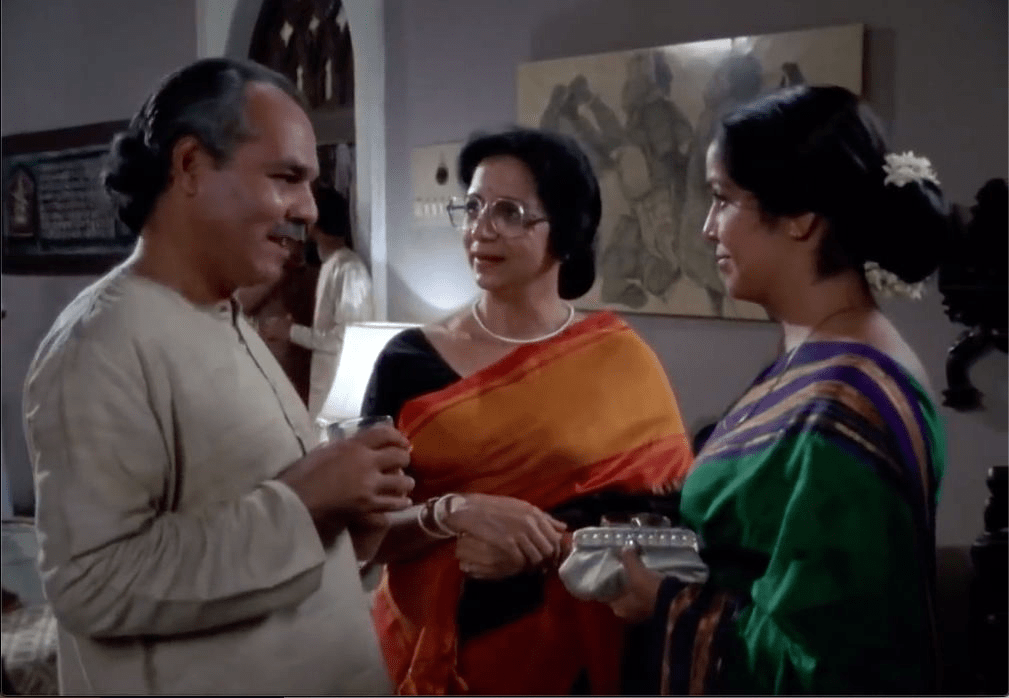
It was a provoking thought and it reminded me of Amrita Pritam’s short story I’d once read. Its translated version is titled as “Birth of a Poem” and the crux of the story for me was that every form of good art is infact a by-product of one’s deepest, darkest secrets. Until the artist dosent let it out through his work, it lives within, like a dangerous serpent.
I haven’t really made up my mind on how I feel about the debate in the film though. Can art be separated from politics or do they always have to go hand in hand? I’ll leave it to you to answer the question.
The bigger takeaway for me personally was that young writer’s view. You express your art because you can’t help it. It’s within you and you have to let it out.
Such an interesting final scene of a film. One that can only lead to good discussions.
-Aishwarya Bedekar
 Ityādi Diaries
Leave a comment