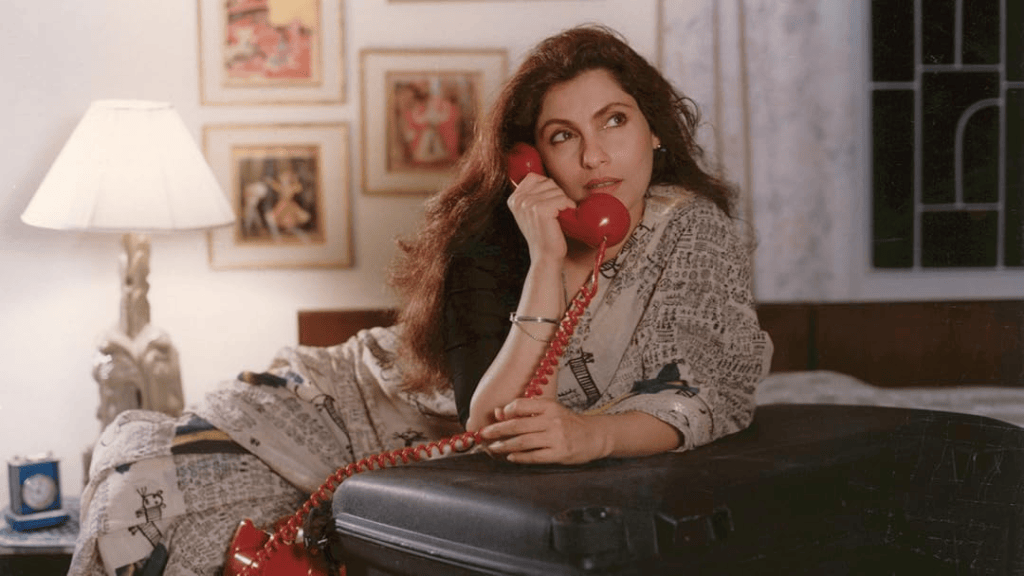
Have you ever felt so alone, that conversations with a nameless, faceless stranger feel comfortable? This was how I felt after watching Antareen.
I was living a few hours of solitude this weekend. The house was empty, the maid had bunked work, rains wouldn’t stop. A grey sort of slow, sleepy milieu had taken over the Saturday. I had woken up to the patter of rains and all I wanted was a cup of coffee. I didn’t switch on the television, did not read my book, didn’t even so much as put on any music. I just sat by my window, with my coffee, staring outside. Blank slate, like as though time had stopped for that moment. I knew this moment wouldn’t last too long. Soon, the mind will be inundated with weekend chores. The electrician this, and the laundry that.
I was not interested in making an elaborate lunch. That’s one of one of the cons of solitude. I am definitely happier when cooking for more people. When it’s just for myself, motivation is at the lowest. I ended up with dal chawal and one piece of fish fry, sneakily stolen away from the next day’s elaborate lunch.
I’ve been on a Dimple Kapadia film spree last couple of days. I started with “Dil Chahta Hai” – every millennials introduction to Dimple Kapadia. The film had just completed 25 years, so it was a mandatory rewatch anyway. Then I watched “Bobby” and followed it up with “Drishti”. So it wasn’t much of surprise that my next watch would also be another Dimple Kapadia film, but a Bengali film this time on.
“Antareen” came up on my Instagram feed once. It wasn’t much – just beautiful Dimple, standing on a balcony, in a cotton sari, staring into nothingness, quite almost like I was staring into nothingness on this particular morning. The nothingness, of course. The beauty, well, I can’t say much considering I had oil in my hair and wore a cotton kaftan.
I had checked on Google, for OTT platforms where I can watch Antareen. I found a decent print on YouTube but the subtitles were added on through AI so it wasn’t all too perfect. I managed, somehow.
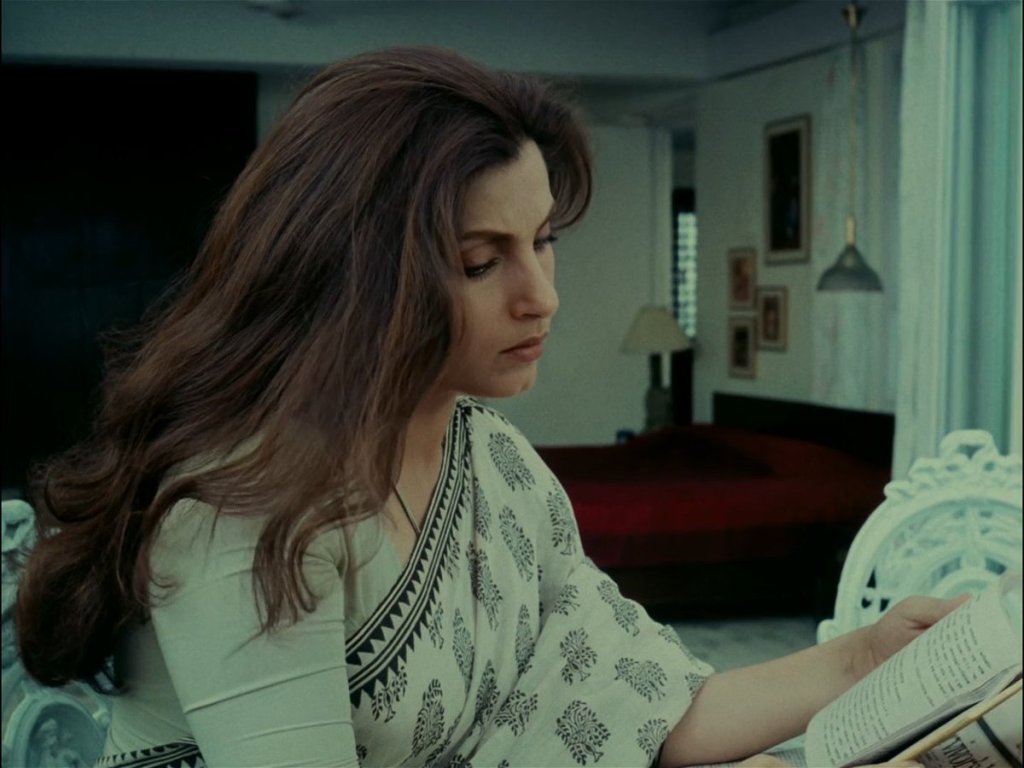
“Antareen” is about a writer who is looking for creative inspiration for his next book. His friend, who owns a run down haveli in Calcutta invites him over to stay at the haveli for a while to get some writing inspiration. The writer reaches the haveli and we are sort of taken through the house along with the writer. The paint on the walls has worn off, the doors creek as they open, it’s dark and dingy and almost ghost like in some parts.
As the writer settles into the house, he gets a phone call on the old landline. Since he knows no one around the haveli, he expects the call would be his friend. It turns out to be an unexpected call from a mysterious woman. Instead of ending the conversation, the two get to talking. For two people who don’t know each other, have never met each other, it’s unsettling how easily they both start talking to each other.
Slowly, through many days of just chatting with each other, the writer and the woman form a bond. They get to know each other’s lives but never each other’s names. The bond grows stronger and with each passing day, the writer seems to eagerly wait for a call from this mystery woman. There are so many scenes in the film where the writer settles into his rocking chair seated close to the telephone, waiting for that one phone call.
Through their conversations we get to know that the woman is trapped in a loveless marriage with a rich man. The way she speaks about him, it almost feels like this rich man has exploited her and left her confined in a house she dosent care about and a marriage she is not interest in. We don’t fully get to know about the writer’s past or present because he is seen trying to understand the mystery woman. He gives her all the space she needs to open up, to talk about what she wants to.
The atmospheric setting of the duo is quite different from each other and yet so similar. The writer, stuck in a haveli which is spacious, airy but because it’s so run-down, he is confined to a few rooms in the haveli. Most rooms of the haveli cannot be used because of their terrible condition. For all the abundance of space in the haveli, the writer’s kitchen is a makeshift cylinder stove where he mainly boils his chai. We don’t see him eat at all! The mystery woman, living on the top floor of a high rise building, in an urban, modern apartment, is somehow also confined into the four walls of her home with no connection to the ground reality.
Their conversations are also extremely vague but interesting with each of them trying to hold back and not divulge too much, while also trying to speak their heart out. Their first conversation begins with boiling a cup of chai and somehow chai becomes a big part of their relationship. Almost so close to a real relationship where a couple would meet for chai and conversations at a restaurant. It’s the director’s genius to make a chai-boiling scene look beautiful and artistic.
I think that the only appropriate end to a film or a bond like these two have, is that nothing really happens and every possible ending is possible. When the time comes for the writer to pack up and leave the haveli, he knows in that moment that he is emotionally involved in this woman however cannot do much about it. The final train station scene where the duo chance meet one another is not so different from how they first meet on a telephone call by chance.
This film is a quiet watch. One that you can watch in bits and pieces over many seatings, enjoying every scene, every moment.
My Bengali friends helped me understand that in one of the scenes, the writer is lying on his bed and reading “Kshudita Pashan” of Rabindranath Tagore and that this film is loosely based on this book and also based on Sadat Hasan Manto’s short story called “Badshahat ka Khatimah”.
Maybe I will read these books someday. Let’s see. For now, fangirling over Dimple Kapadia.
-Aishwarya Bedekar


Leave a Reply